Designed as the commercial leg of the VERY ecosystem, Delivery offers a scalable body architecture aimed at last-mile urban logistics, high maneuverability ergonomics, and a futuristic industrial design identity.
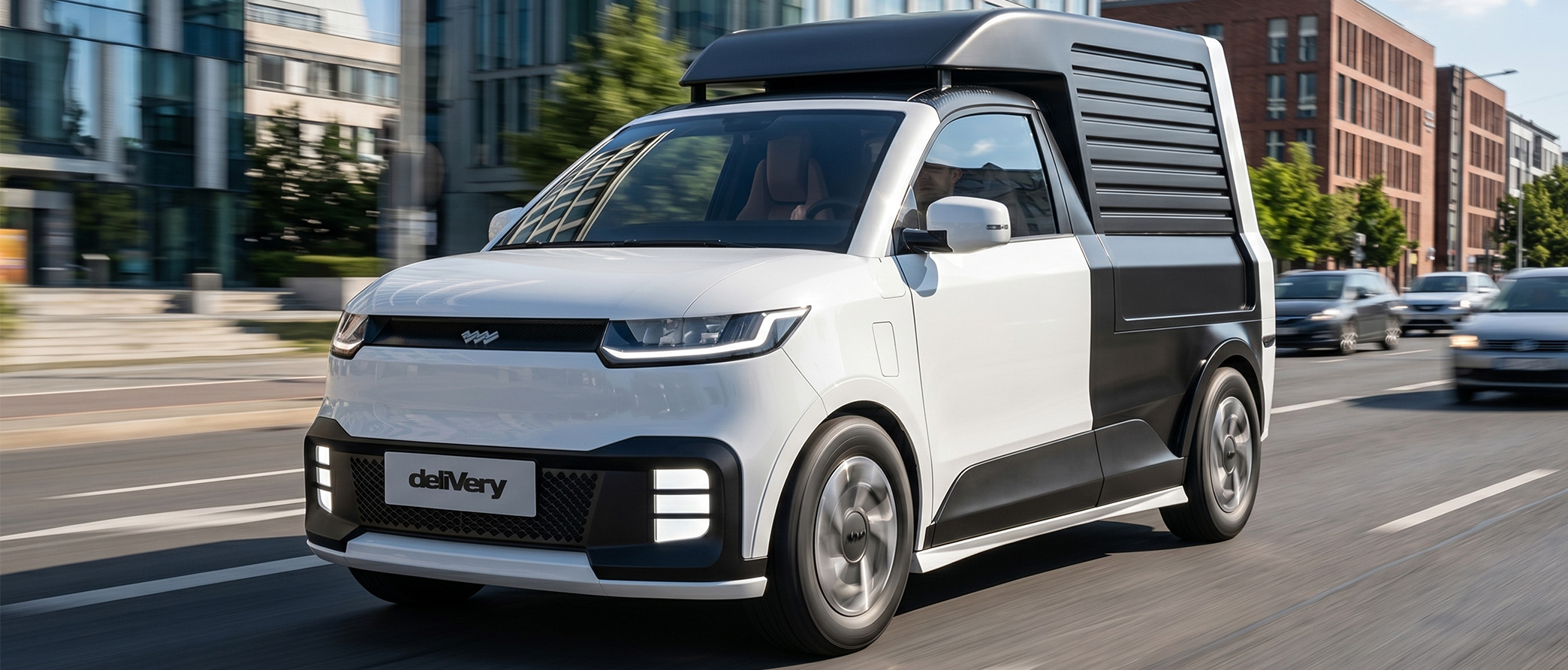
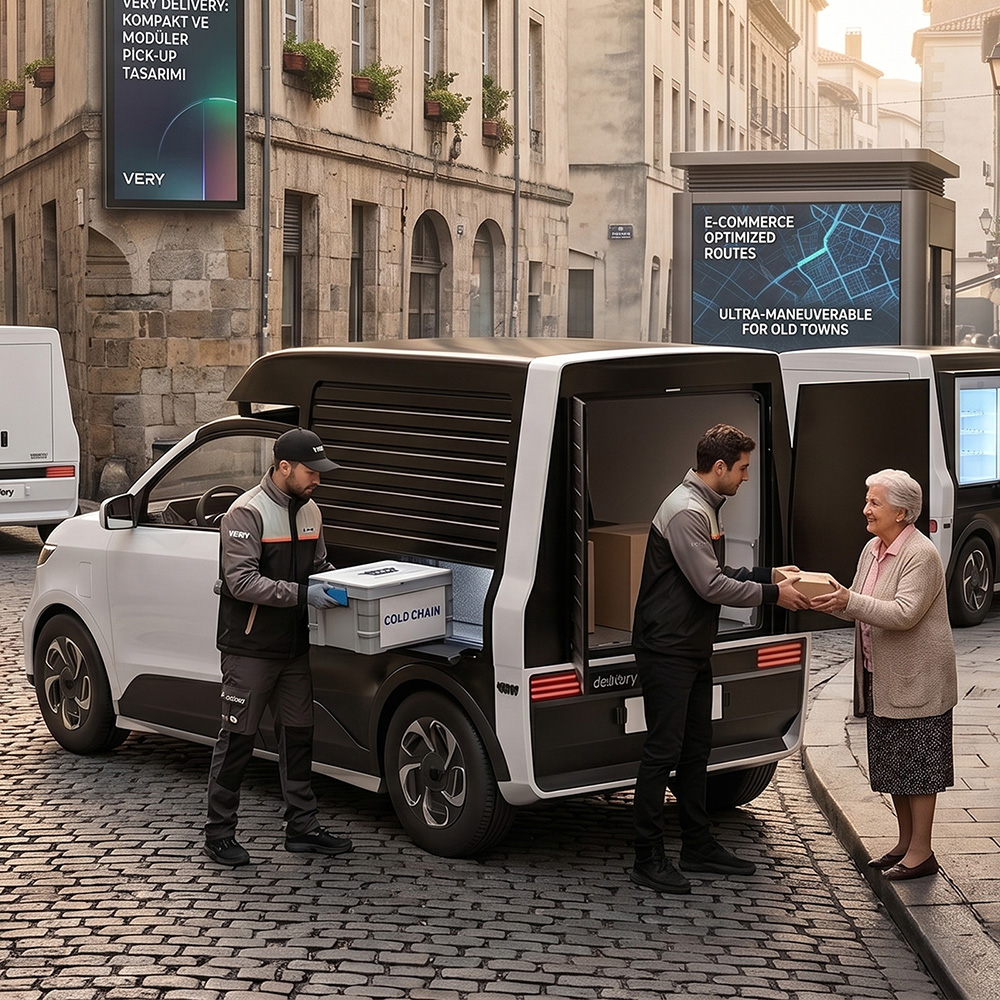
The growth of e-commerce volume and narrow historical streets in today's metropolises necessitate a new understanding ofelectric commercial vehicle designbeyond traditional vans. TheDeliverymodel, which we developed for the commercial family of theVERYplatform and directed the design of, is a compact and modular pick-up solution with high maneuverability focusing on last-mile cargo operations.
As DesignPerest Studio, we brought commercial functionality together with an aesthetic language that makes no compromises in this project. While a surface geometry resistant to harsh fleet conditions was structured on the vehicle's exterior lines; compact dimensions, an optimal loading threshold, and ergonomic cabin details that ensure the comfort of couriers were prioritized throughout the day.
“Delivery redefines commercial efficiency with its modular pick-up structure, smart loading architecture, and compact design that breaks new ground in urban logistics.”
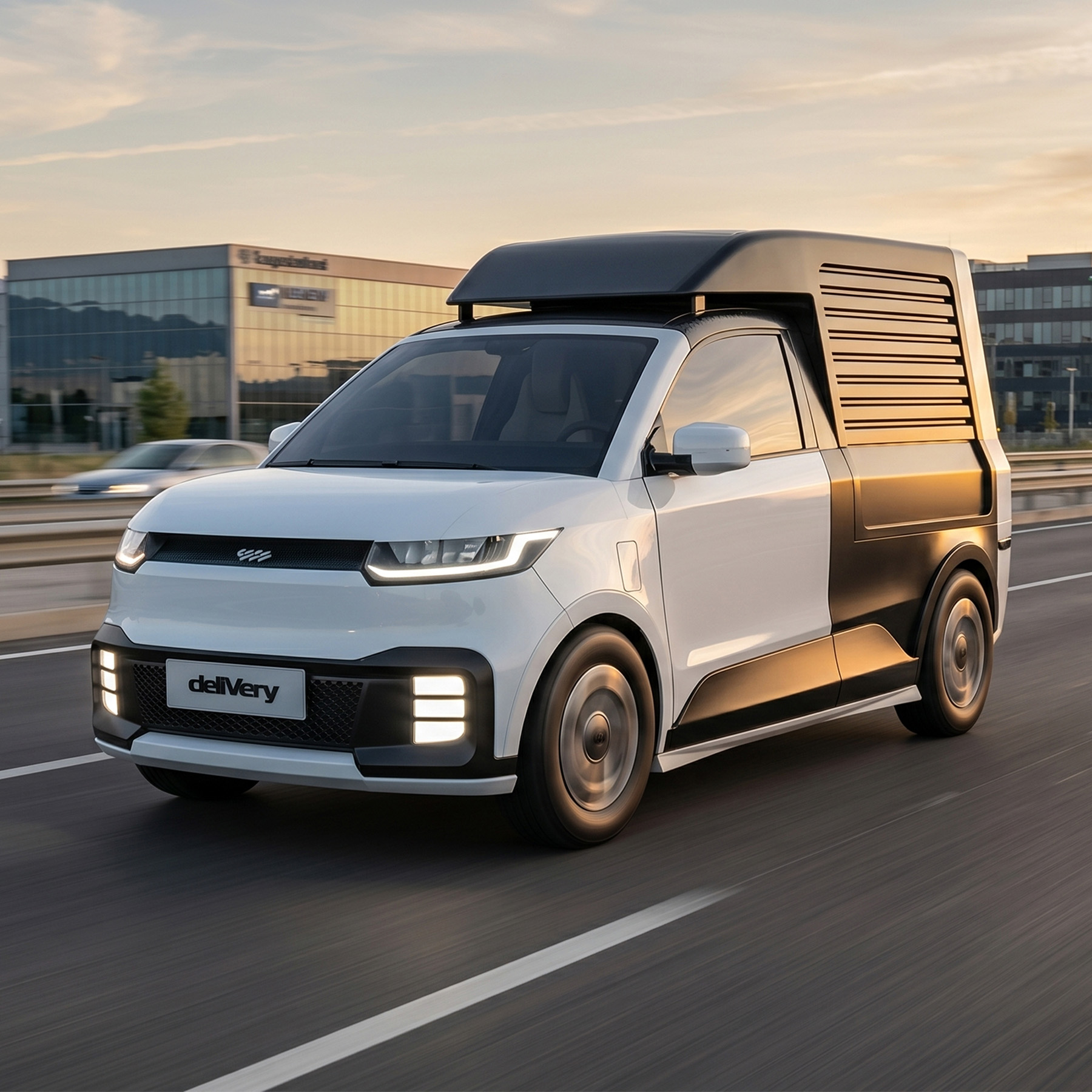
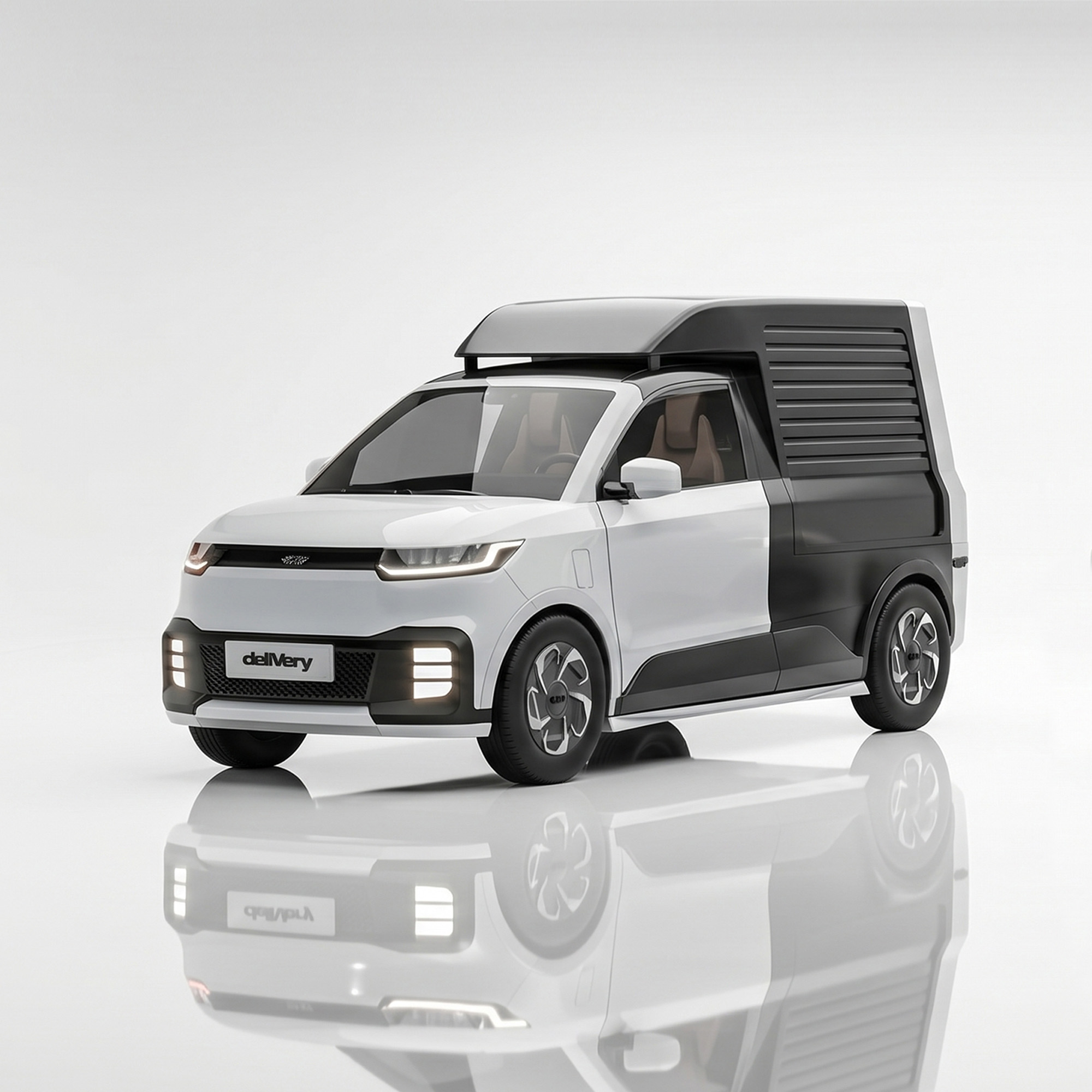
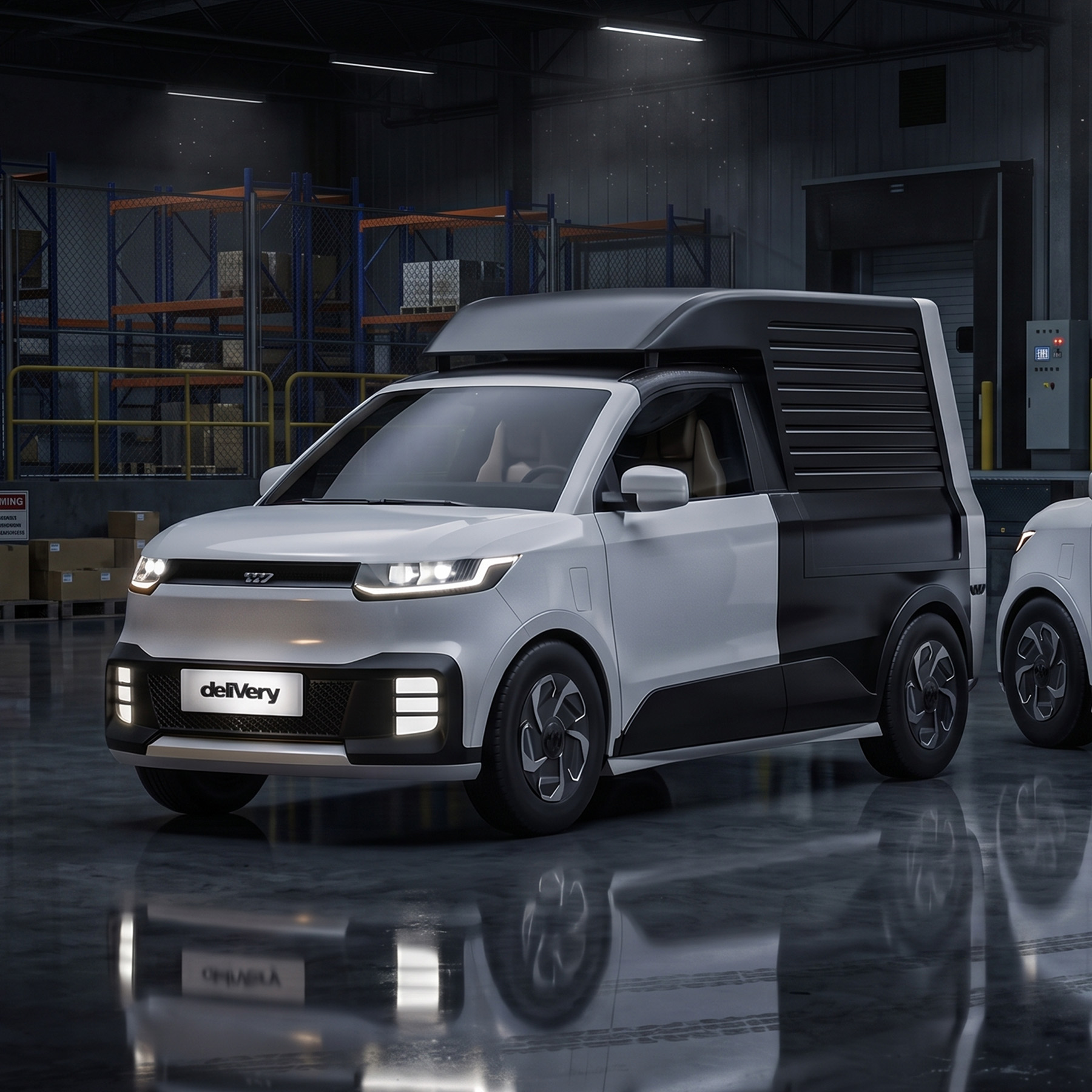
A low nose slope and characteristic commercial headlight design that maximizes driver visibility in narrow urban streets.
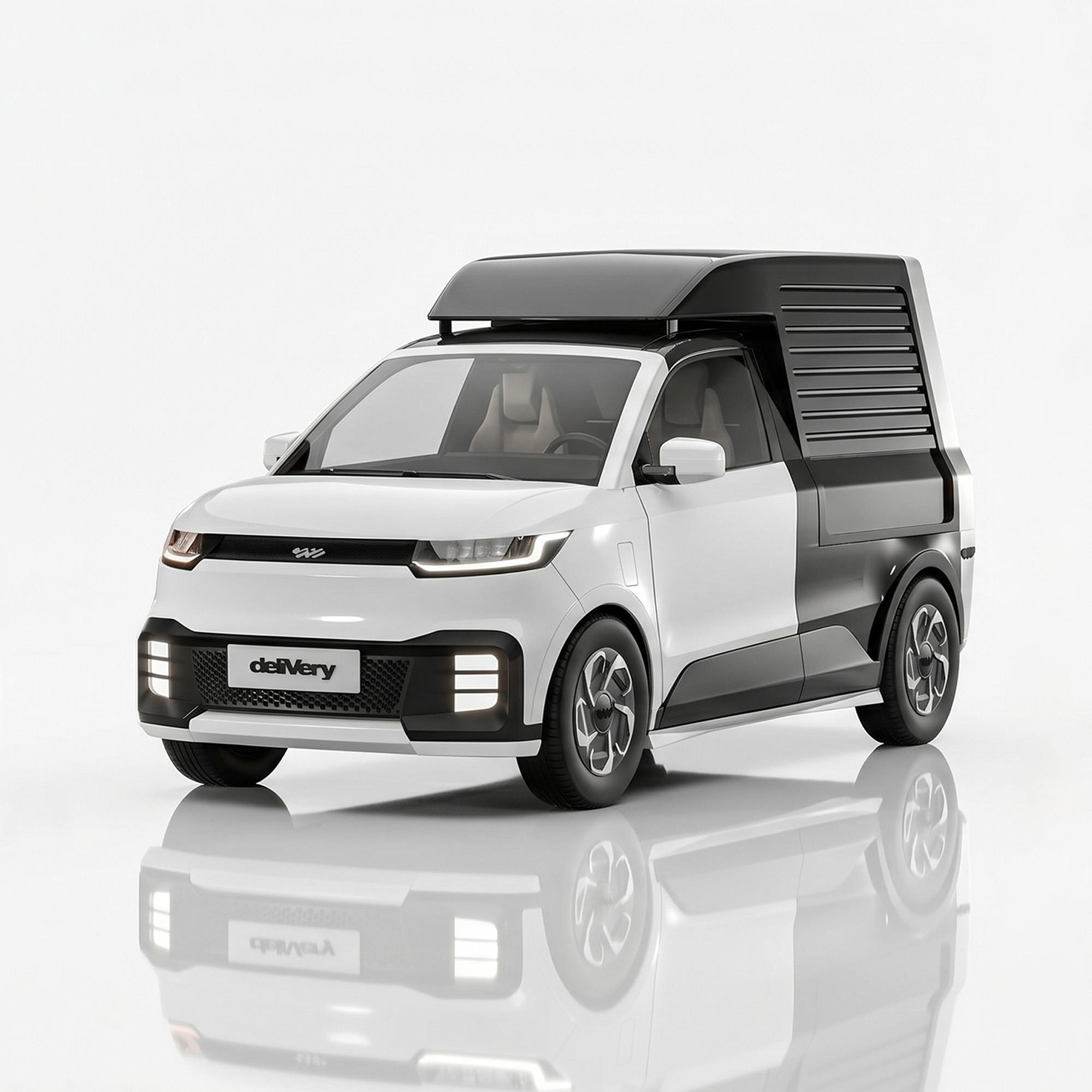
Fluid and clean Class-A exterior surface modeling resistant to the harsh conditions brought by commercial use.
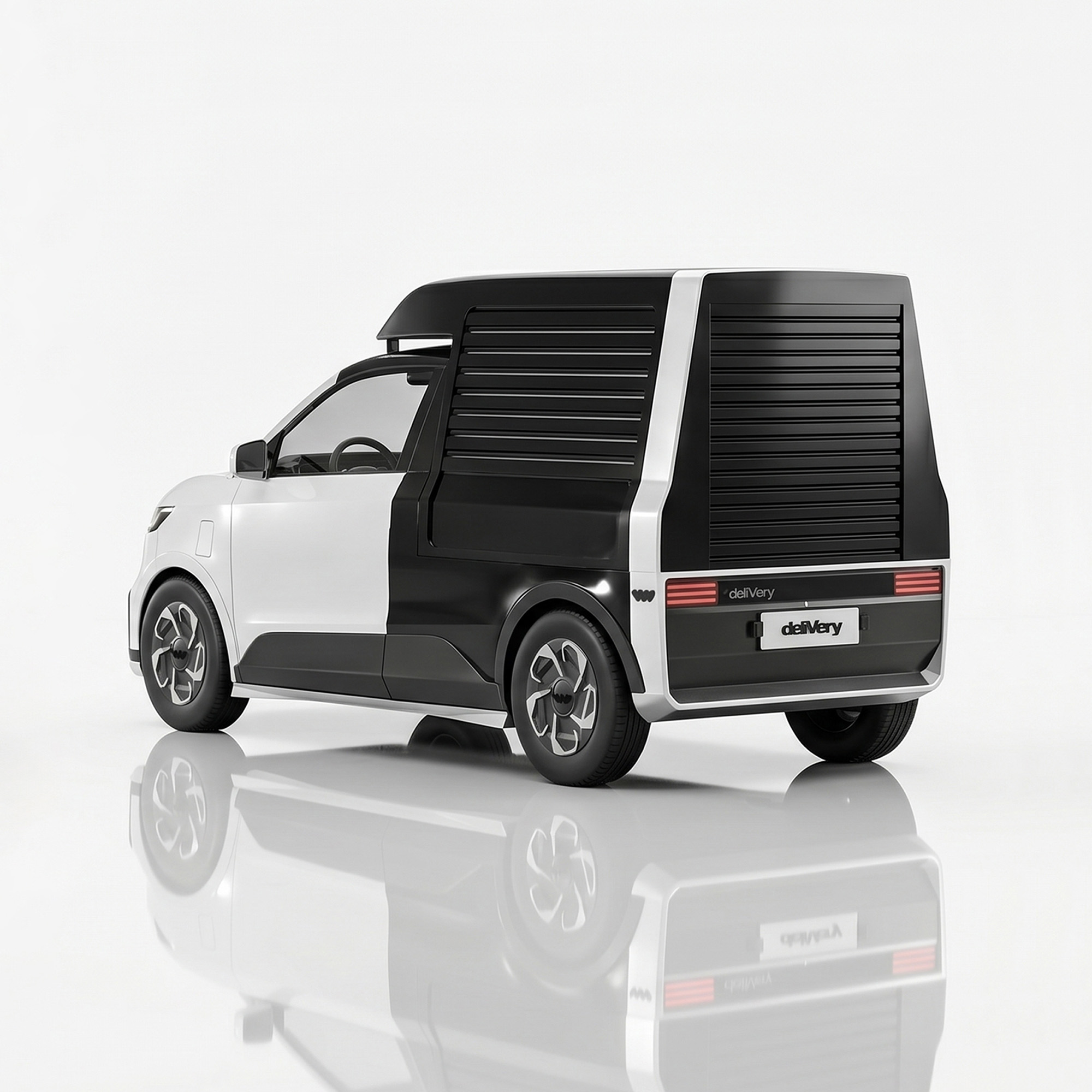
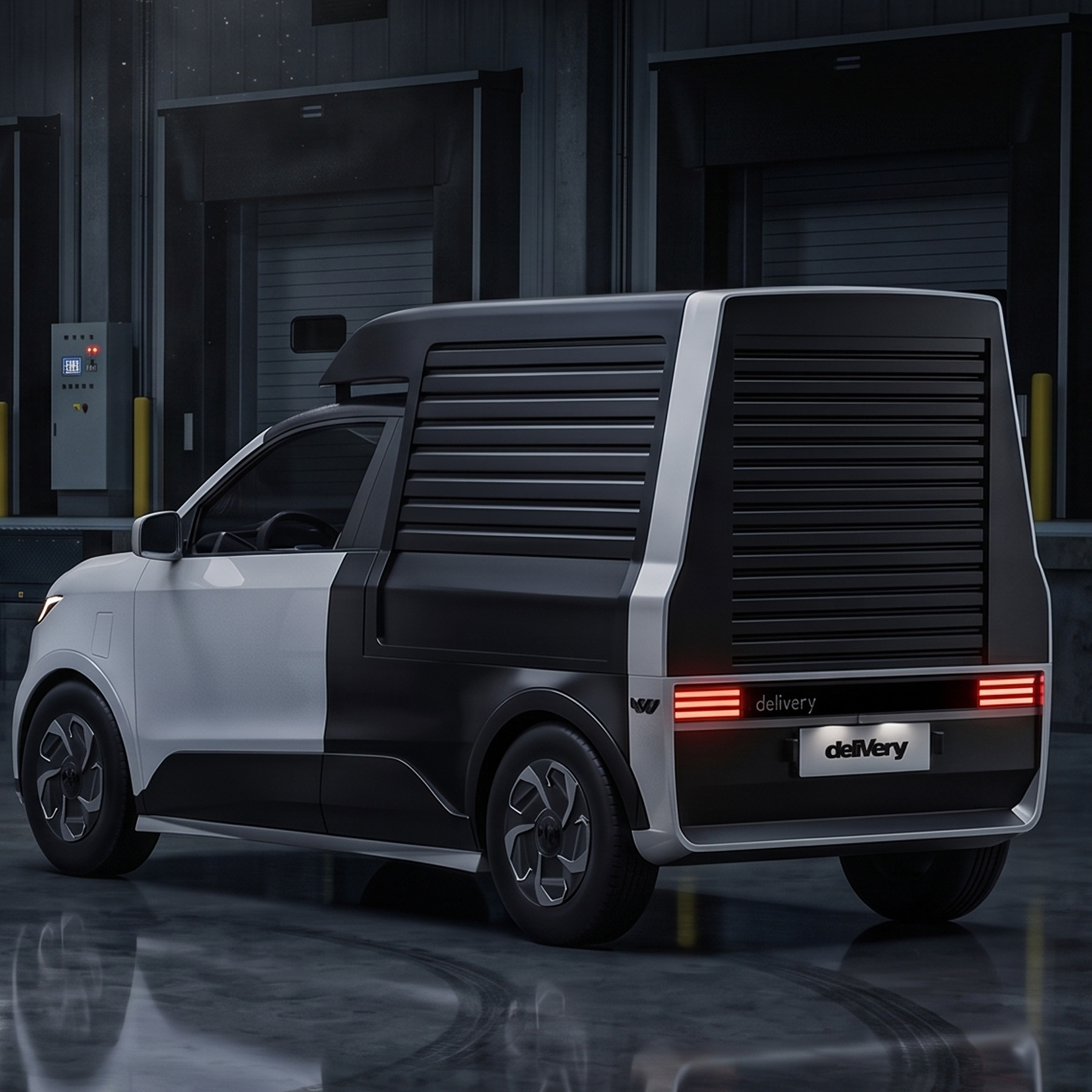
1:1 scale industrial form and proportion analyzes that establish the balance between rear cargo capacity and cabin seating.
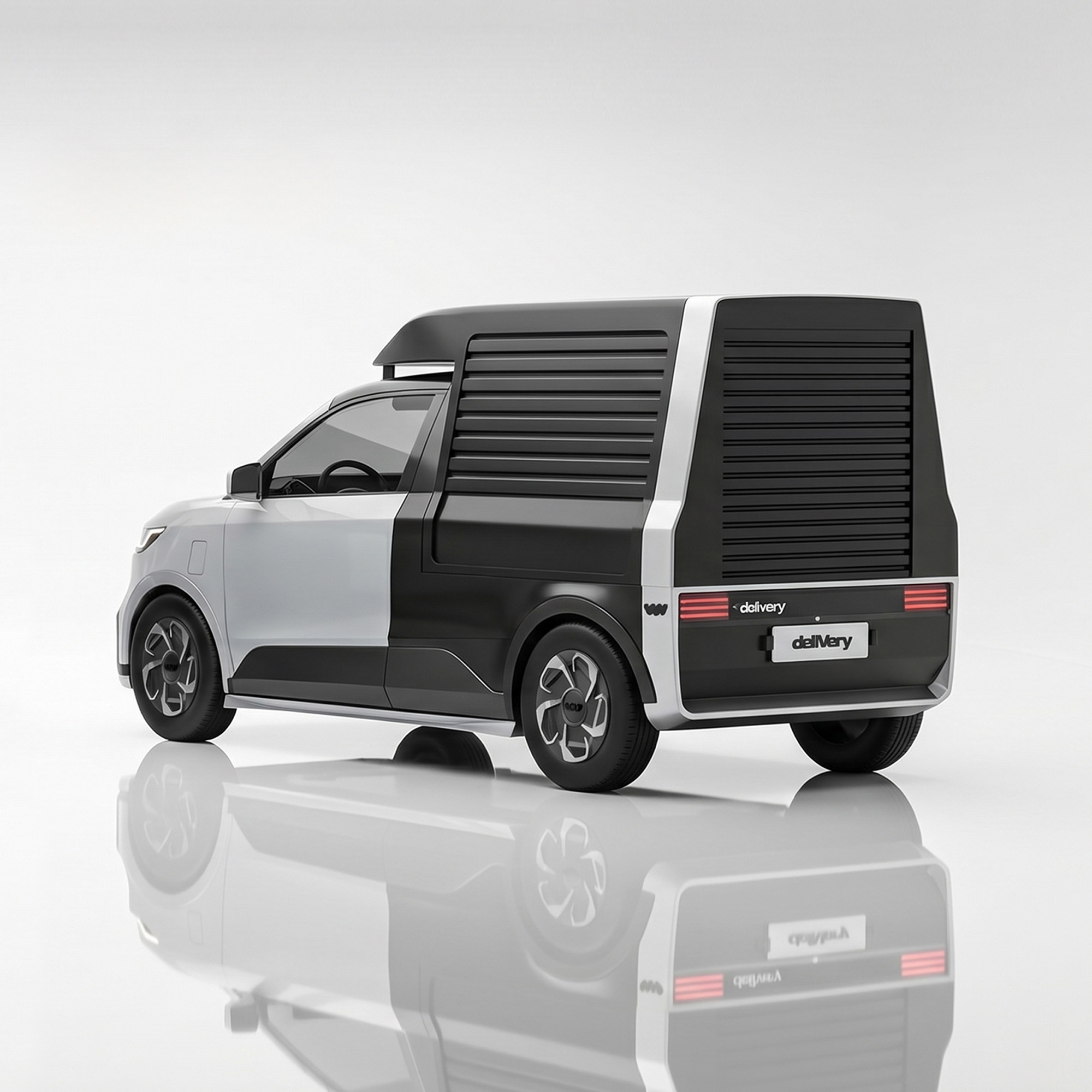
The most crucialindustrial design innovationof the Delivery model is the scalable modular architecture of its rear body setup. The vehicle was developed with an infrastructure that can be configured in minutes from a standard open pick-up bed to a closed cargo cabin, from a refrigerated food transport unit to special compartments for municipal and utility services.
The flexible thermoform polymer panels applied to the body surfaces protect the vehicle against friction and scratches that may occur in intensive urban distribution conditions while offering low spare part costs. This modular transformation capability provides fleet managers and SMEs the flexibility to perform different logistics tasks at different times of the day with a single vehicle investment.
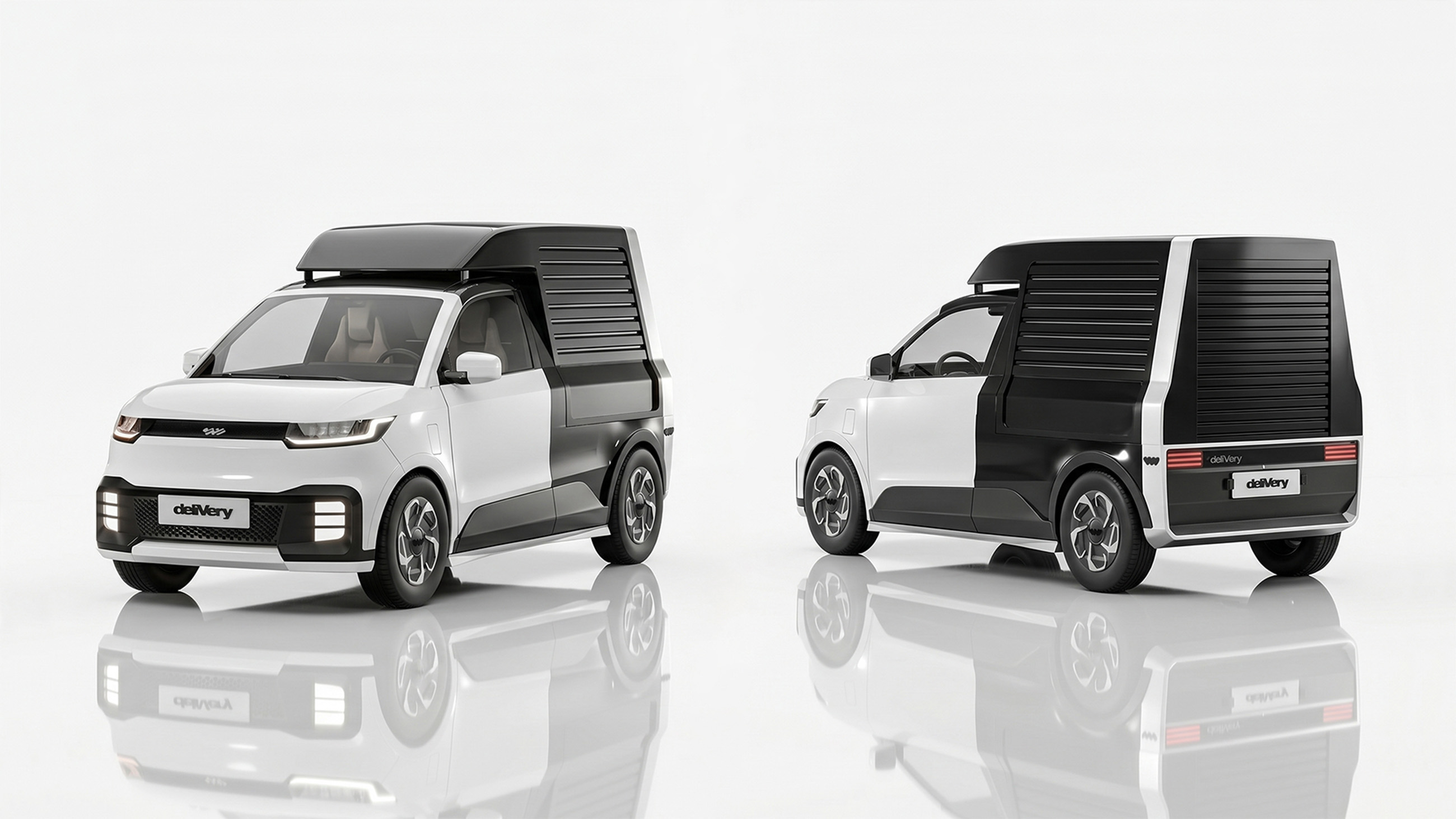
Every second is valuable in urban courier and delivery processes. Delivery is structured with wheel and axle geometry to achieve the smallest turning radius in narrow streets. While the exterior dimensions of the vehicle are optimized for curb loading and narrow parking areas, the body panels are covered with flexible thermoformed polymer materials that are resistant to intense fleet conditions, scratches, and minor impacts.
In theinterior design, a wide door opening, a low floor threshold, wear-resistant fabric upholstery, and practical storage slots for handheld terminals such as package barcode scanners have been designed to make it easier for the driver to get in and out of the vehicle hundreds of times all day.
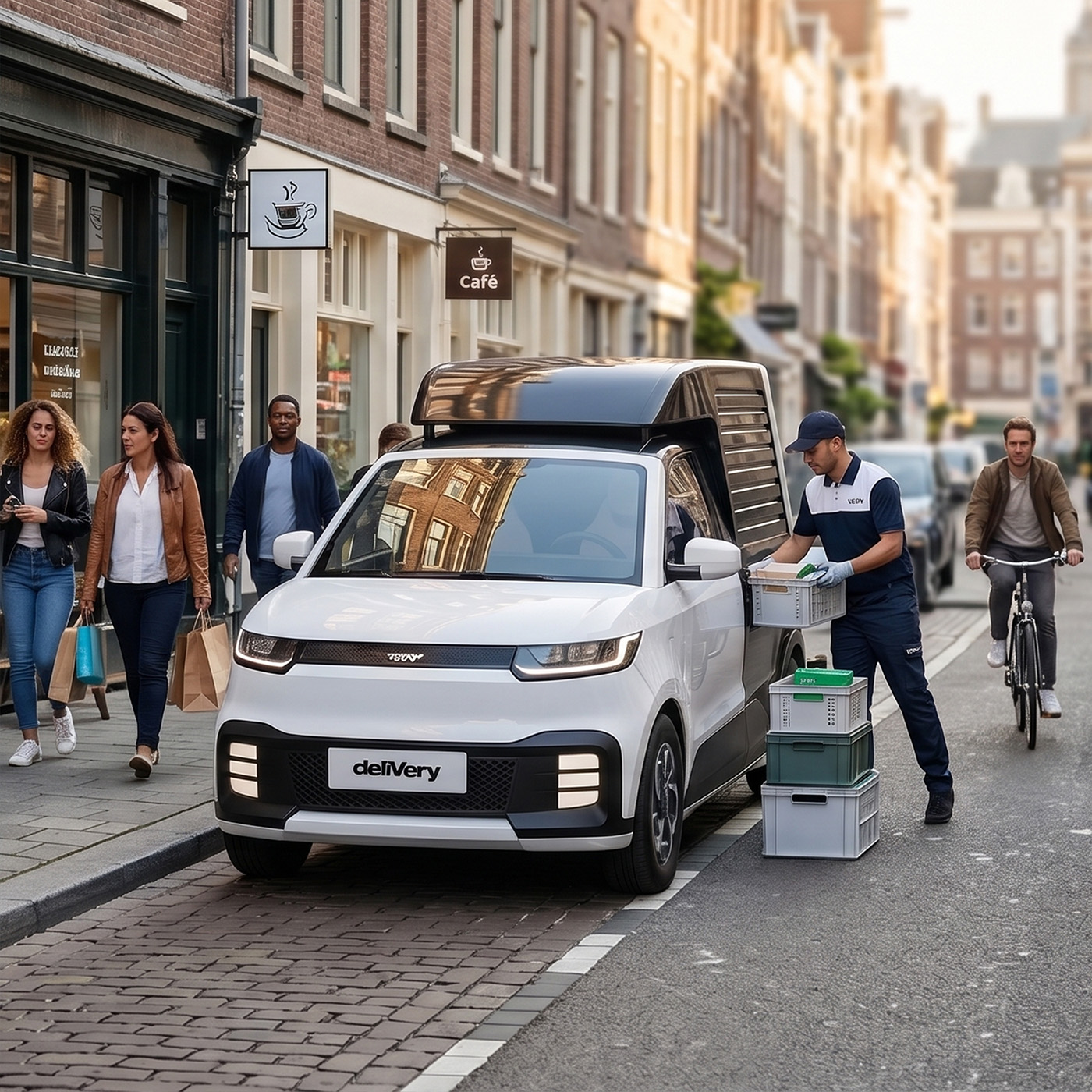
Lowered step and ergonomic door opening angle for couriers getting in and out hundreds of times a day.
An industrial front console design that does not distract from the road, featuring durable and intuitive button placement.
Scratch-resistant matte polymers and easy-to-clean surfaces for intensive commercial fleet operations.
In a commercial vehicle, technology should not complicate the driver's job; On the contrary, it should simplify it. The digital information screen positioned on Delivery's front console features a high-contrast graphic interface that makes battery status, instant consumption, route planning, and cargo delivery sequencing comprehensive at a glance.
Thanks to integrated fleet telemetry, vehicle managers can remotely monitor battery health, maintenance cycles, and fleet efficiency in real time.
A low floor geometry providing ergonomic package loading/unloading and integrated securing hooks.
A patented mounting architecture that allows different superstructure modules to be fixed to the chassis without tools.
Thermoform protection parts that can be easily replaced in case of urban friction and collisions.
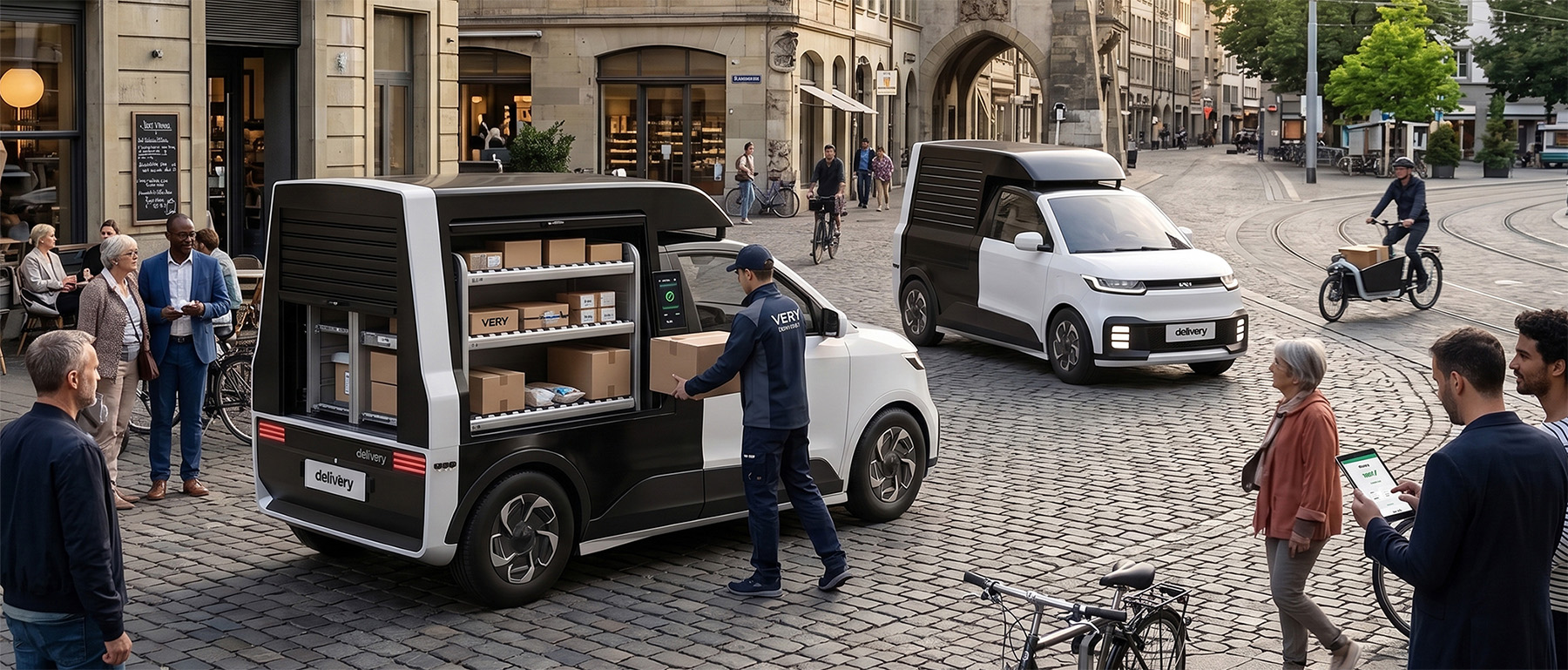
A toolless superstructure system that can transform into an open pick-up, closed cargo bed, and refrigerated unit in minutes.
Lowered step, wide door, and supportive seat design for personnel getting in and out of the cabin hundreds of times a day.
Unpainted, self-colored thermoformed ABS body panels resistant to intensive urban friction.
A driver-friendly digital interface that optimizes charging, range, instant consumption, and delivery sequencing.
Urban last-mile cargo scenarios, bed volumes, and height constraints.
Dynamic nose compatible with the VERY family, wide field of view, and modular bed sketches.
Class-A exterior body modeling, cargo locking cross-sections, and HMI interface in the digital environment.
Thermoform molds, loading threshold on the rolling chassis, and modular lock tests.
Verification of maneuverability, turning radius, and energy consumption in narrow urban streets.